
Applications of High-Speed Cameras: From Industrial Testing to Cinematic Storytelling
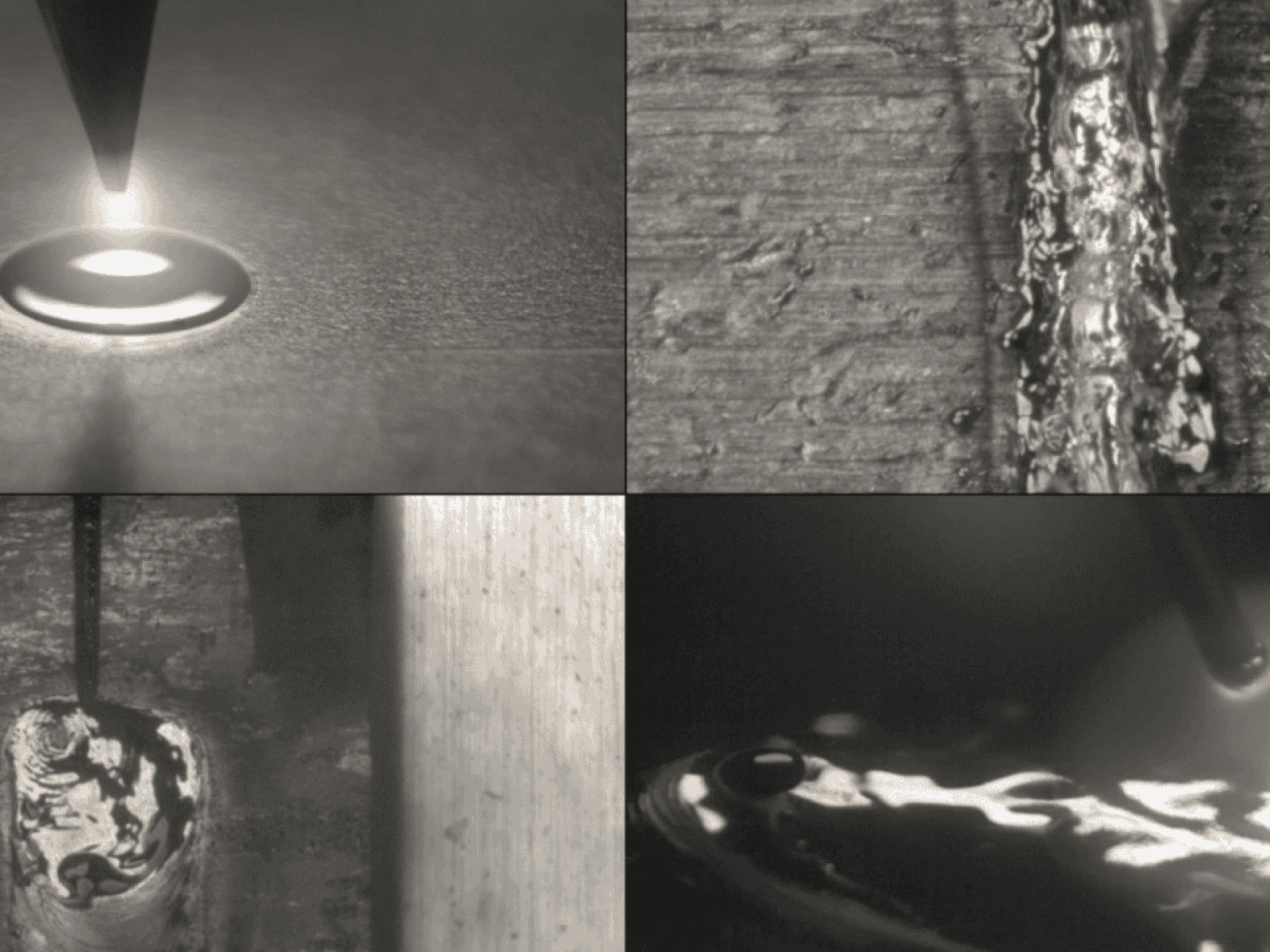
High-speed cameras have become essential tools across science, engineering, manufacturing, and even entertainment. By capturing events that happen in microseconds, they reveal details too fast for the human eye or conventional video equipment. Whether it is understanding how a product breaks during a drop test, analyzing complex fluid patterns, or producing cinematic slow motion for advertisements, high-speed imaging opens a window into hidden worlds.
In this blog post, we explore the major applications of high-speed cameras across industries, with examples ranging from crash tests and ballistics to content creation and biomechanics. These use cases highlight how powerful high-speed imaging has become for innovation, problem solving, and storytelling.
1. Product and Material Testing
One of the most common uses of high-speed cameras is in product and material testing. Understanding how materials behave under stress, impact, or motion helps engineers improve safety and durability.
Drop Testing
Companies conduct drop tests on everything from smartphones and appliances to packaging and protective gear. A high-speed camera captures the exact moment of impact and how shock waves travel through the product. Engineers can identify weak points, understand deformation, and redesign more durable structures. What looks like an instant break to the human eye becomes a sequence of analyzable frames when recorded at thousands of frames per second.
Crash and Impact Testing
In automotive, aerospace, and industrial equipment sectors, high-speed cameras are critical during crash simulations. They capture vehicle deformation, airbag deployment, material rupture, and occupant movement. This footage helps manufacturers validate safety designs and comply with regulatory standards. Even small-scale impact studies, such as testing helmets or industrial housings, benefit from slow-motion analysis.
Robotics and Automation
Manufacturing environments use high-speed cameras to evaluate robotic movements, conveyor timing, precision assembly, and pick and place operations. If a robotic arm misplaces a part or a machine jams at high speed, slow motion reveals the underlying cause. These insights allow for improved synchronization, reduced downtime, and smoother workflow.
2. Fluid Dynamics and Flow Visualization
Fluids move in ways that are often too fast or too complex to analyze visually. High-speed cameras reveal those patterns in detail, making them invaluable for research in physics and engineering.
Fluid Flow Analysis
In laboratories and industrial R&D facilities, researchers use high-speed imaging to study:
- Turbulence in air and water
- Splash dynamics
- Jet and spray formation
- Bubbles, droplets, and vapor behavior
These insights are crucial in fields such as aerodynamics, chemical processing, marine engineering, and environmental sciences. For example, studying spray atomization in fuel injectors helps in optimizing combustion engines for efficiency and lower emissions.
Surface Tension and Hydrodynamic Stability
High-speed footage captures delicate interactions between liquids and surfaces, such as droplets bouncing, merging, or spreading. These micro-events influence applications ranging from inkjet printing and coating technologies to biomedical research.
Schlieren Imaging
Schlieren imaging visualizes invisible changes in air density, temperature, and pressure. High-speed cameras paired with Schlieren setups are used in:
- Supersonic airflow research
- Heat transfer studies
- Jet propulsion experiments
This type of visualization helps researchers see shock waves, heat plumes, and aerodynamic disturbances that would otherwise remain hidden.
3. Ballistics and Combustion Analysis
High-speed cameras are essential in environments where objects move at extremely high velocities or reactions occur in microseconds.
Ballistics Testing
Defense research labs and weapon manufacturers rely on high-speed imaging to track projectiles, bullet trajectories, casing ejection, and explosive reactions. Recording at tens or hundreds of thousands of frames per second allows analysts to study:
- Projectile stability
- Flight path deviations
- Barrel exit behavior
- Impact fragmentation
This information supports safety, performance optimization, and forensic analysis.
Combustion Research
Combustion involves rapid chemical reactions and flame propagation, making high-speed cameras indispensable for engine designers and scientific researchers. Applications include:
- Visualizing ignition sequences
- Studying flame speed and shape
- Evaluating fuel injector spray patterns
- Monitoring internal combustion engine events
These insights aid in improving energy efficiency and reducing emissions in automotive and aerospace engines.
4. Vibration and Motion Analysis
Even small vibrations can cause significant damage in machinery over time. High-speed cameras help engineers quantify motion that is otherwise too fast to see.
By analyzing slow-motion footage, experts can detect:
- Misalignment in mechanical parts
- Wear or fatigue in structures
- Excessive oscillation in turbines, fans, or motors
- Irregularities in rotating equipment
Capturing vibrations at high frame rates supports predictive maintenance, reduces failure risk, and enhances machine stability.
5. Biomechanics and Sports Performance
High-speed cameras are widely used in both professional sports and academic research to understand human movement with incredible precision.
Swing and Motion Analysis
Athletes and coaches rely on slow-motion video to refine technique. Sports such as golf, baseball, tennis, and cricket benefit from frame-by-frame analysis of:
- Joint movement
- Swing plane
- Footwork
- Equipment interaction
This visualization helps identify inefficiencies, prevent injuries, and boost athletic performance. In medical research, high-speed imaging is used to study gait analysis, muscle response, rehabilitation movements, and prosthetics testing.
6. Advertising and Content Creation
High-speed cameras are increasingly being used outside of industrial settings. Content creators, filmmakers, and advertisers use them to tell stories in visually striking ways.
Creative Slow Motion Effects
Dramatic slow-motion scenes have become a staple in commercials, social media videos, and product demonstrations. High-speed cameras allow creators to capture:
- Water splashes
- Food drops and ingredients in motion
- Explosions of color
- Motion transitions
- Product interactions such as phones bending or buttons pressing
These shots give viewers a cinematic experience and highlight features that would otherwise go unnoticed.
YouTube and Social Media Production
Modern creators use high-speed cameras for experiments, tutorials, sports clips, art videos, science demonstrations, and behind-the-scenes content. The ability to record at thousands of frames per second gives online content a premium, professional touch.
7. Research and Advanced Industrial Applications
Beyond mainstream uses, high-speed cameras support specialized scientific and engineering work.
Aerospace and Aerodynamics
Capturing airflow over wings, propellers, or UAV structures helps researchers improve flight stability and efficiency.
Material Deformation Studies
Metallurgists and material scientists use slow motion to study fracture mechanics, elasticity, and fatigue.
Micro-scale Events
High-speed cameras can capture events such as microdroplet formation, electrical arc behavior, and small-scale mechanical interactions that occur too fast for the eye to detect.
8. Choosing the Right High-Speed Camera
Selecting the best high-speed camera depends on the type of work involved. Key factors include:
- Frame rate requirements for capturing the event without motion blur
- Resolution for detailed analysis
- Light sensitivity since high frame rates require additional illumination
- Recording duration depending on event length
- Lens compatibility for close-up or wide-angle views
Modern high-speed cameras are more compact, affordable, and user friendly than ever, making them accessible for both laboratory research and commercial production.
Conclusion
High-speed cameras play an essential role in understanding the fast processes that shape our world. From product and material testing to ballistics, fluid dynamics, sports science, and creative filmmaking, these tools make it possible to analyze, improve, and innovate in ways that were once impossible. As technology advances, the applications of high-speed imaging will continue to expand, empowering industries, researchers, and creators to capture the unseen and transform it into actionable insights.
