Selection Guide for Zoom Block Cameras in EOIR Systems
Electro-Optical Infrared (EOIR) systems are widely used in surveillance, defense, industrial monitoring, and unmanned platforms. A key component in many of these systems is the zoom block camera, which enables long-range observation and target tracking in a compact form factor.
Selecting the right zoom block camera depends on factors such as optical zoom capability, focal length, DRI performance, and physical size. This guide outlines the main considerations for choosing a zoom block camera for EOIR applications.
The Role of Zoom Block Cameras in EOIR Systems
EOIR systems combine visible imaging and thermal imaging technologies to provide enhanced situational awareness across varying environmental conditions. Visible cameras deliver high-detail imagery during daylight operations, while infrared thermal cameras detect heat signatures in darkness, smoke, fog, or adverse weather.
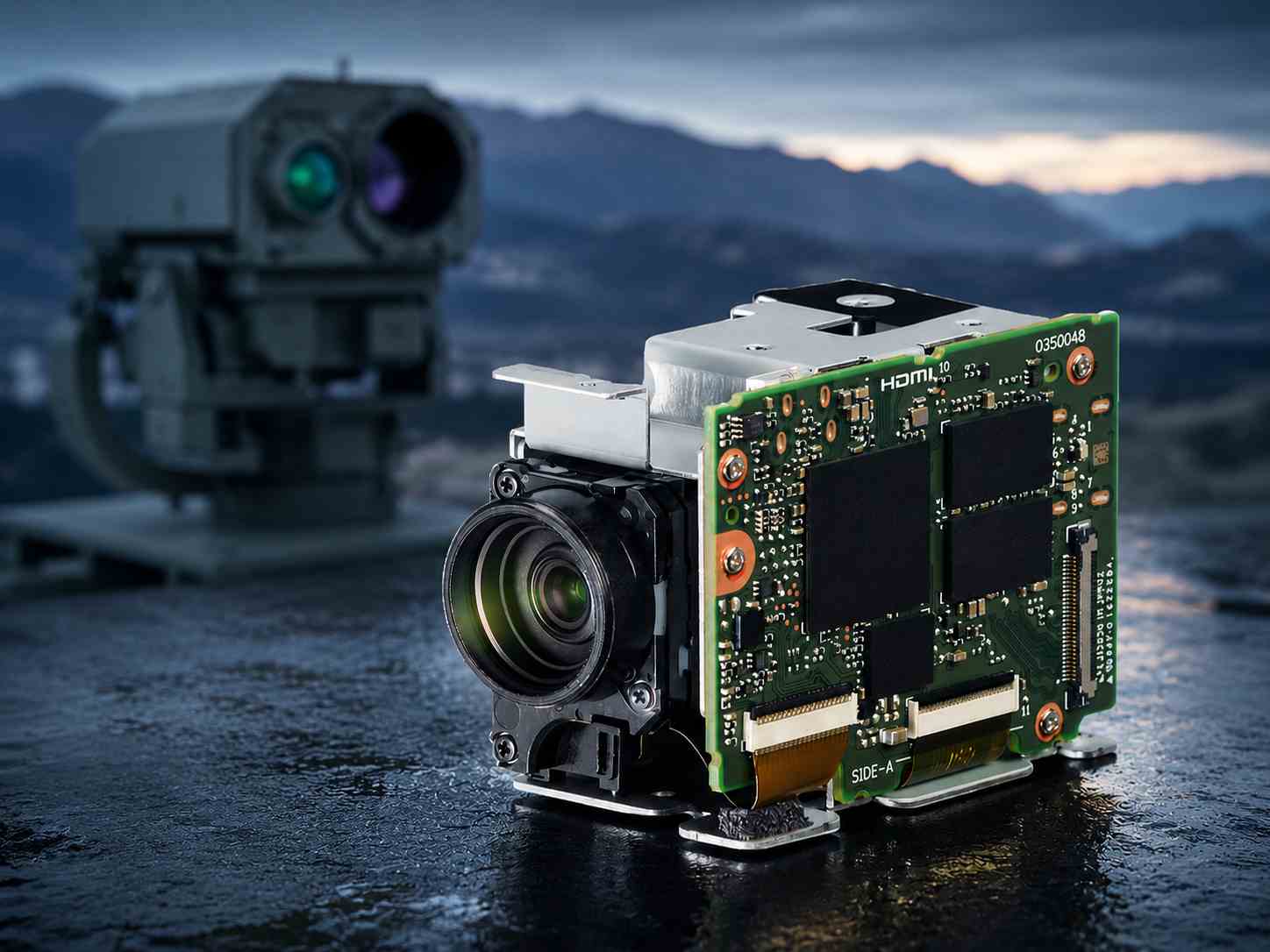
Zoom block cameras are widely used in EOIR systems because they offer flexible long-range observation in a compact form factor. These cameras are commonly integrated into:
- UAV and drone gimbals
- Border surveillance systems
- Maritime monitoring platforms
- Vehicle-mounted EOIR payloads
- Industrial inspection systems
- Smart city and traffic monitoring networks
The ability to zoom in on distant objects while maintaining image clarity is critical in applications where target tracking, threat assessment, or object identification is required.
Optical Zoom vs Digital Zoom
One of the most important aspects of selecting a zoom block camera is understanding the difference between optical zoom and digital zoom.
Optical Zoom
Optical zoom physically adjusts the lens focal length to magnify a scene without reducing image quality. Because the magnification occurs optically rather than electronically, image resolution and detail are preserved throughout the zoom range.
This is particularly important in EOIR systems where operators may need to identify vehicles, vessels, or individuals at long distances.
Key benefits of optical zoom include:
- Higher image clarity
- Better long-range detail
- Improved target identification
- More accurate surveillance performance
In professional EOIR applications, high optical zoom ratios are often essential for maintaining usable image quality over extended observation ranges.
Digital Zoom
Digital zoom works by electronically enlarging a portion of the image. While this can provide additional magnification, it does not add new image detail. Instead, pixels are enlarged, which can reduce sharpness and image clarity.
Digital zoom is useful as a supplementary feature, especially for short-range observation or image review. However, it should not replace optical zoom in applications where detail retention is critical.
For defense, maritime, and long-range surveillance systems, optical zoom remains the preferred solution.
Understanding Focal Length
Focal length is another critical factor in zoom block camera selection. It determines both the magnification level and the camera’s field of view.
Short focal lengths provide a wider viewing angle, making them ideal for monitoring larger areas, navigation and improving situational awareness. Long focal lengths narrow the field of view but allow operators to observe distant targets with greater detail.
For example:
- Wide focal lengths are commonly used for perimeter monitoring, navigation and area surveillance
- Medium focal lengths are suitable for traffic monitoring and industrial inspection
- Long focal lengths are ideal for border security, maritime surveillance, and tactical EOIR systems
In EOIR applications, longer focal lengths are often paired with high-resolution sensors to improve long-range target observation. However, increasing focal length can also increase camera size, lens weight, and stabilization requirements.
When selecting focal length, several factors should be considered:
- Observation distance
- Required target detail
- Sensor resolution
- Mounting platform limitations
- Environmental conditions
Balancing field of view and magnification is essential to achieving optimal EOIR performance.
Distance and DRI Performance
DRI stands for Detection, Recognition, and Identification. It is one of the most important methods used to evaluate EOIR imaging performance. DRI is defined by the no of pixels required for Detection, Recognition and Identification, which could lesser for Detection 2-3 pixels to 12+ pixels for identification, depending on target
Detection
Detection refers to the ability to determine whether an object is present within a scene.
Recognition
Recognition allows the operator to classify the object, such as identifying whether the target is a person, vehicle, or vessel.
Identification
Identification provides sufficient image detail to distinguish specific characteristics of the target, such as identifying an individual or determining vehicle type.
DRI performance is especially critical in defense, border security, and surveillance applications where operational decisions rely on accurate target assessment.
Several factors influence DRI range, including:
- Sensor resolution
- Pixel size
- Lens focal length
- Thermal sensitivity
- Atmospheric conditions
- Image processing quality
For example, a thermal EOIR camera may detect a vehicle several kilometers away but may require additional optical magnification to positively identify the target.
Understanding DRI requirements helps system designers select the correct zoom block camera for specific operational needs.
Weight and Size Considerations
Size and weight are becoming increasingly important as EOIR systems are integrated into smaller and more mobile platforms.
UAV and Drone EOIR Systems
In UAV applications, payload limitations directly affect flight time and maneuverability. Lightweight zoom block cameras are preferred because they reduce overall payload weight while still delivering strong imaging performance.
Compact EOIR zoom systems help improve:
- Flight endurance
- Stabilization efficiency
- Gimbal responsiveness
- Power consumption
However, reducing size often requires balancing optical performance, zoom range, and sensor capabilities.
Fixed and Vehicle-Mounted EOIR Platforms
Larger EOIR systems used in coastal surveillance, border monitoring, or vehicle-mounted operations may prioritize longer focal lengths and extended DRI performance over compactness.
These systems often feature:
- Larger optics
- Enhanced stabilization
- Multi-sensor configurations
- Rugged environmental protection
Selecting the correct form factor depends on deployment environment, platform limitations, and operational requirements.
Video Interface & Camera Controls
Include details about existing interface options such as HDMI, USB3.0, Ethernet, MiPi and LVDS
LVDS is the most common output of Zoom Block, and we can support with necessary conversion boards from LVDS
Common zoom camera control is via VISCA
Integrations with Edge Platforms
Most of such EOIR systems uses edge processors like Jetson and the Zoom block camera should support integration with these platforms.
Additional Factors to Consider
Beyond zoom capability and DRI range, several other specifications can influence EOIR system performance.
Sensor Resolution
Higher resolution sensors improve image detail and support more effective digital processing and tracking.
Low-Light Performance
Visible EOIR cameras frequently operate in challenging lighting environments. Sensor sensitivity and low-light optimization are critical for maintaining image quality during dawn, dusk, and nighttime operations.
Stabilization
Long-range EOIR systems often require electronic or optical stabilization to compensate for vibration and movement, especially on airborne or marine platforms.
Environmental Protection
EOIR systems deployed outdoors must withstand harsh operating conditions such as rain, dust, salt exposure, vibration, and extreme temperatures. Ruggedized housings and environmental sealing are essential for reliable operation.
Conclusion
Zoom block cameras are a critical component of modern EOIR systems, enabling long-range observation, target tracking, and enhanced situational awareness across a wide range of applications.
Selecting the right zoom block camera requires careful evaluation of several key factors, including optical zoom capability, focal length, DRI performance, and physical size. Optical zoom remains essential for preserving image quality over long distances, while focal length directly impacts field of view and target magnification. DRI specifications help determine whether a system can effectively detect, recognize, and identify targets under real-world conditions.
As EOIR technologies continue to evolve, modern zoom block cameras are becoming more compact, powerful, and capable of delivering exceptional imaging performance across demanding operational environments. By understanding these core selection criteria, system integrators and engineers can build EOIR solutions optimized for performance, reliability, and mission success.
