Zoom Block Cameras for Airborne, Ground, and Maritime Applications
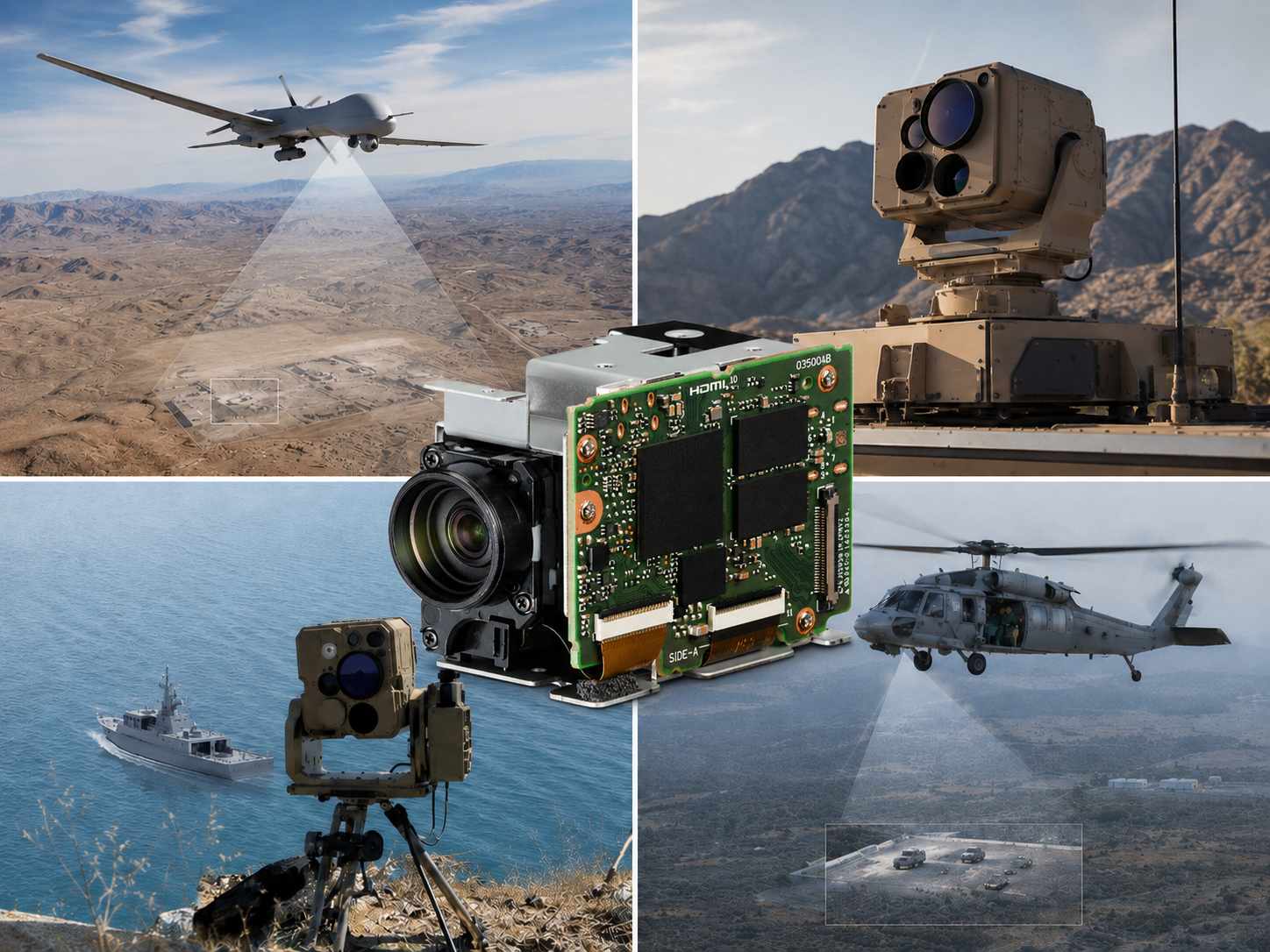
Zoom block cameras have become a critical technology across surveillance, defense, industrial monitoring, and public safety applications. Their ability to deliver long-range, high-quality imaging in compact and rugged form factors makes them ideal for airborne, ground-based, and maritime environments. As a key component of modern EO/IR systems, zoom block cameras play a vital role in achieving required Detection, Recognition, and Identification (DRI) performance.
From UAV surveillance and border security to coastal monitoring and infrastructure inspection, these cameras provide the flexibility and imaging capability needed for demanding operational environments.
What Are Zoom Block Cameras?
A zoom block camera is a compact Electro Optical camera module that combines an image sensor, optical zoom lens, autofocus system, and image processing technology into a single integrated unit. Unlike conventional fixed-lens cameras, zoom block cameras are designed for long-range observation and dynamic imaging applications where operators need to identify or track objects at varying distances.
Modern zoom block cameras are available in visible and NIR spectrum allowing them to operate effectively in both daytime and low-light environments. Many systems also support advanced features such as image stabilization, AI-powered tracking, and IP streaming for integration into larger surveillance or control systems.
Their compact size and high-performance capabilities make them especially useful in platforms where space, weight, and power efficiency are important considerations.
Key Capabilities of Modern Zoom Block Cameras
The effectiveness of a zoom block camera depends heavily on its capabilities and how well they match the intended application.
Long-Range Optical Zoom
One of the most important features of a zoom block camera is its optical zoom capability. Unlike digital zoom, optical zoom maintains image clarity while magnifying distant targets. Modern systems commonly offer zoom ranges from 30x to 55x or more, enabling operators to monitor wide areas and identify objects from significant distances.
This capability is particularly important for border surveillance, maritime monitoring, and aerial reconnaissance applications.
Variable Focal Length
Optical zoom is defined by the variable focal length range supported by a camera. However, selecting a camera based solely on its optical zoom rating may not meet your long-distance Detection, Recognition, and Identification (DRI) requirements, as DRI performance is largely influenced by the camera’s maximum focal length.
For example, a camera with a focal length range of 3.3 mm to 33 mm provides 10x optical zoom, while a camera with a range of 5.5 mm to 55 mm also provides 10x optical zoom. Despite having the same zoom ratio, the 55 mm maximum focal length enables imaging at greater distances and can deliver superior DRI performance.
For a better understanding of how focal length impacts target visibility and DRI performance, please view our Range Test videos.
High-Resolution Imaging
High-resolution sensors allow zoom block cameras to capture detailed imagery even at long distances. Full HD and 4K imaging have become increasingly common, improving target recognition and overall situational awareness.
In applications such as infrastructure inspection or defense surveillance, image clarity can directly impact operational decision-making.
Low-Light and NIR Imaging
Many zoom block cameras are designed to operate in challenging lighting conditions. Starlight sensors enhance visibility in low-light environments, with performance typically defined by the camera’s lux sensitivity. Cameras with lower lux ratings offer better sensitivity, enabling clearer imaging in starlight and moonlight conditions.
Zoom block camera sensors are designed to support both day and night operation and are typically sensitive to the near-infrared (NIR) spectrum up to 940–1000 nm, allowing them to work effectively with NIR illumination for enhanced nighttime imaging.
ICR Switching
ICR Switching (Infrared Cut Filter Removal) is a mechanical or electronic mechanism used in zoom block cameras to switch between daytime color imaging and nighttime infrared (IR) black-and-white imaging.
When ambient light levels drop below a certain threshold, the camera detects the change and automatically removes the IR-cut filter. This allows the image sensor to capture infrared light, enabling the camera to produce clear, high-contrast black-and-white images in low-light or complete darkness.
Image Stabilization
For moving platforms such as drones, aircraft, or marine vessels, image stabilization is essential. Optical and electronic stabilization technologies help reduce motion blur and maintain image clarity even in high-vibration environments.
Without stabilization, long-range imaging performance can be significantly reduced, especially at high zoom levels.
Matching Capabilities to Applications
Different EOIR systems require different camera capabilities. Choosing the right zoom block camera involves understanding the relationship between performance specifications and real-world application requirements.
EOIR systems are always defined by DRI – Detection, Recognition & Identification of the target in both day and night conditions. While IR in the EOIR systems can be SWIR, MWIR & SWIR, depending on the imaging environment and conditions
DRI of EO camera is always dependent on the variable focal length and the optical zoom the camera can support. DRI requirements vary with application it is intended for. E.g. For navigation assistance, the system prefers to have wider angle of view at lower focal length and for long range detection, longer focal length will be preferred.
Understanding these requirements is critical when selecting a camera system for a specific deployment.
Airborne Applications
Airborne platforms are among the fastest-growing applications for zoom block cameras. Drones, helicopters, and fixed-wing aircraft increasingly rely on advanced imaging systems for surveillance and inspection tasks.
UAV Surveillance and Reconnaissance
Unmanned aerial vehicles use zoom block cameras for intelligence, surveillance, and reconnaissance operations. Long-range zoom allows operators to monitor targets from safe distances while maintaining detailed visual information.
These systems are widely used for border patrol, disaster assessment, environmental monitoring, and infrastructure inspection.
Search and Rescue Operations
Airborne zoom block cameras play an important role in search and rescue missions. IR imaging capabilities help locate missing individuals in low-light or challenging terrain conditions, improving response efficiency and safety.
Industrial Inspection
Power lines, pipelines, railways, and wind turbines can all be inspected using aerial imaging systems equipped with zoom block cameras. High-resolution imaging enables operators to detect structural issues without requiring direct physical access.
For airborne applications, low weight, compact design, and stabilization are especially important factors.
Ground-Based Applications
Ground surveillance systems use zoom block cameras for security, monitoring, and industrial automation across a wide range of industries.
Border and Perimeter Security
Long-range imaging capabilities make zoom block cameras ideal for monitoring critical infrastructure, military installations, and national borders. Operators can detect and identify potential threats at significant distances while maintaining continuous surveillance coverage.
Smart Cities and Traffic Monitoring
Cities increasingly use intelligent camera systems for traffic management and public safety. Zoom block cameras can monitor intersections, highways, and public spaces while supporting AI-based analytics and incident detection.
Industrial Monitoring
Industrial facilities such as mining sites, oil and gas plants, and manufacturing facilities often require remote monitoring in hazardous or hard-to-access areas. Zoom block cameras provide operators with detailed visibility while improving operational safety.
Wildlife and Environmental Monitoring
Conservation organizations also use long-range imaging systems for wildlife observation and forest monitoring. IR imaging and ICR Switching can assist in detecting wildfires or tracking animal movement during nighttime conditions.
Ground-based systems typically require durable outdoor enclosures, continuous operation capability, and strong long-range performance.
Maritime Applications
Maritime environments present some of the most challenging conditions for imaging systems. Saltwater exposure, vibration, fog, and constantly changing weather conditions require highly ruggedized camera technology.
Coastal and Harbor Surveillance
Ports, harbors, and coastal facilities use zoom block cameras for vessel tracking, perimeter monitoring, and maritime security. Long-range optical zoom helps operators identify ships and monitor large coverage areas efficiently.
Naval and Defense Operations
Military and naval platforms rely heavily on advanced imaging systems for situational awareness and threat detection. IR imaging and ICR switching technologies are particularly valuable in low-visibility environments.
Offshore Energy Monitoring
Offshore oil rigs and wind farms also use zoom block cameras for remote inspection and operational monitoring. Rugged marine-grade construction ensures long-term reliability in harsh ocean conditions.
The Future of Zoom Block Cameras
The future of zoom block cameras is being shaped by advancements in AI, sensor technology, and edge computing. Higher-resolution sensors, improved optical zoom and extended variable focal lengths are making these systems more intelligent and efficient.
At the same time, miniaturization is enabling powerful imaging systems to be integrated into smaller drones and compact surveillance platforms.
As industries continue to prioritize automation, security, and real-time situational awareness, zoom block cameras will remain an essential component in airborne, ground, and maritime operations.
Conclusion
Zoom block cameras offer a powerful combination of long-range imaging, intelligent tracking, and rugged performance across a wide range of applications. Whether deployed in UAVs, ground surveillance systems, or maritime monitoring platforms, these cameras provide the visibility and operational awareness needed in demanding environments.
By carefully matching camera capabilities to application requirements, organizations can improve security, efficiency, and decision-making across mission-critical operations.
