Embedded Cameras: A Complete Guide to Interfaces, Benefits, and Applications
As industries continue to embrace automation, artificial intelligence (AI), and edge computing, the demand for compact, high-performance imaging solutions has grown rapidly. Embedded cameras have emerged as a key technology, enabling manufacturers to integrate advanced vision capabilities directly into their products without the need for bulky external imaging systems.
From industrial automation and robotics to medical devices and intelligent transportation systems, embedded cameras deliver reliable image capture in a compact form factor while supporting real-time image processing and low power consumption.
In this guide, we’ll explore what embedded cameras are, their key features, interface options, advantages, and the applications that make them an essential component of modern embedded vision systems.
What is an Embedded Camera?
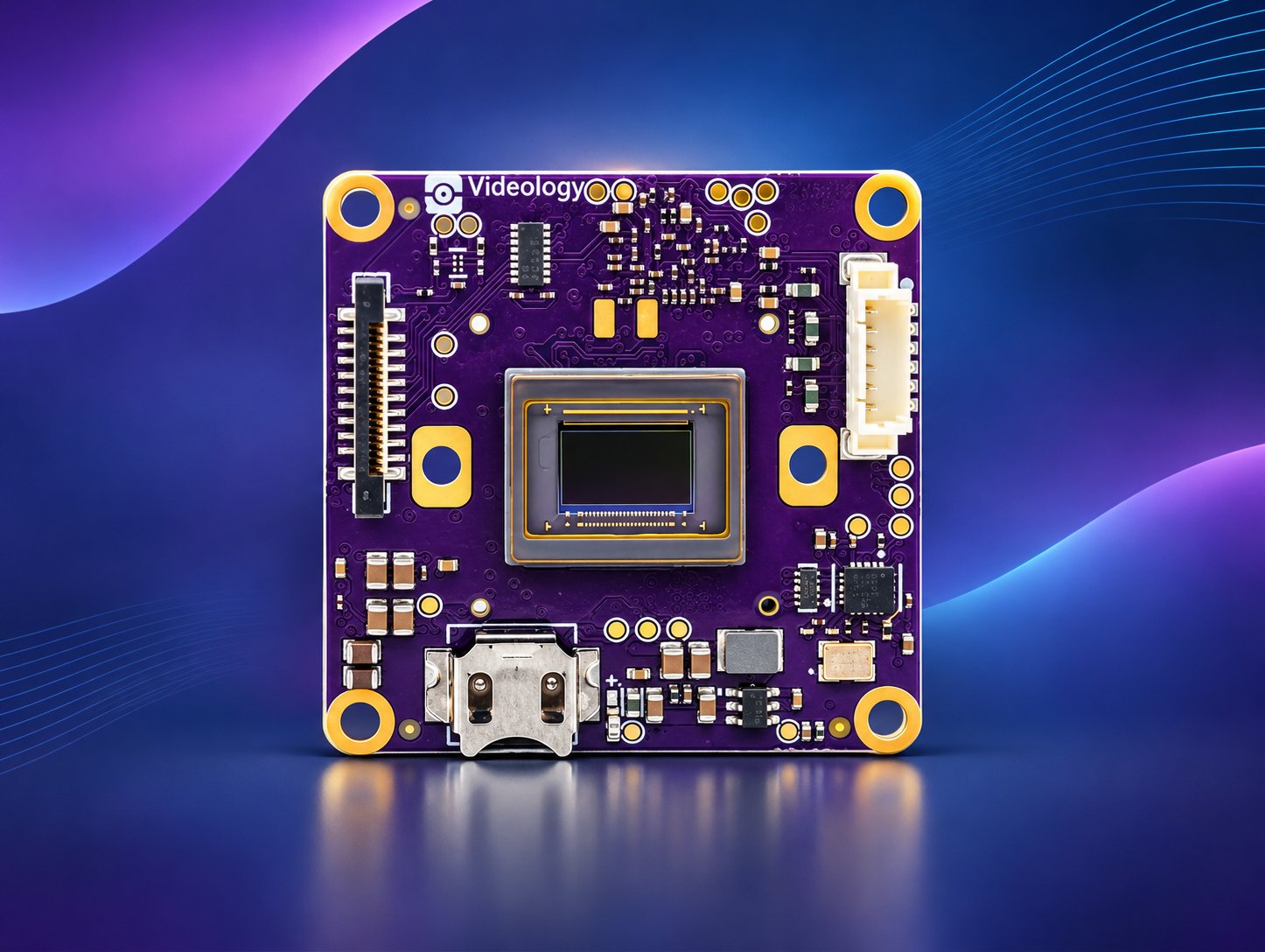
An embedded camera is a compact imaging module designed to be integrated directly into an OEM device or embedded vision system. Unlike conventional machine vision cameras that often rely on an external PC for image processing, embedded cameras are built to work with embedded processors and single-board computers, enabling intelligent imaging within a compact system.
These cameras are commonly used where space is limited, power efficiency is important, and reliable long-term performance is required. They typically consist of an image sensor, camera board, lens interface, and communication interface that connects to the host processor.
Because they are intended for seamless OEM integration, embedded cameras are available in various sizes, resolutions, and interface options to meet the specific needs of different applications.
Benefits of Embedded Cameras
Embedded cameras are designed to meet the demanding requirements of industrial and embedded applications. Some of their key features include:
Compact Form Factor
One of the biggest advantages of embedded cameras is their small footprint. Their compact design allows them to be integrated into products where traditional industrial cameras would be too large, making them ideal for portable devices, robotics, drones, medical equipment, and other space-constrained systems.
Flexible OEM Integration
Embedded cameras are designed for seamless integration into OEM products and embedded vision platforms. Their compact board-level design enables manufacturers to incorporate advanced imaging capabilities into custom hardware with minimal redesign.
Low Power Consumption
Power efficiency is critical in embedded systems. Embedded cameras are designed to consume significantly less power than conventional PC-based imaging systems, making them suitable for battery-powered and mobile applications.
Reliable Performance
Industrial embedded cameras are engineered for continuous operation, providing stable image quality even in demanding environments. Their robust design makes them suitable for manufacturing, transportation, defense, and other mission-critical applications.
Long-Term Availability
Unlike consumer-grade camera modules, industrial embedded cameras are often supported with long product lifecycles. This ensures consistent availability for OEMs, reducing the need for costly redesigns and simplifying long-term product maintenance.
Common Embedded Camera Interfaces
The choice of interface plays an important role in determining an embedded camera’s performance, integration flexibility, and compatibility with the target system. Board cameras from Videology support both analog and digital video outputs, enabling OEMs to select the most suitable interface for their application.
Analog Video Interfaces
CVBS (Composite Video)
CVBS is a standard-definition analog video interface commonly used in legacy imaging systems. It remains a reliable and cost-effective option for applications where high-definition imaging is not required.
AHD (Analog High Definition)
AHD enables high-definition video transmission over standard coaxial cables, making it ideal for industrial monitoring, surveillance, and security applications that require improved image quality without replacing existing infrastructure.
TVI (Transport Video Interface)
TVI supports HD video transmission over long cable distances while maintaining low latency and excellent image quality, making it suitable for industrial and security installations.
SDI (Serial Digital Interface)
SDI delivers uncompressed digital video with minimal latency, making it a preferred choice for professional imaging, broadcasting, medical systems, and industrial applications where image fidelity is critical.
Digital Video Interfaces
USB 2.0
USB 2.0 provides simple plug-and-play integration and is well suited for embedded devices, laboratory equipment, and medical applications where moderate bandwidth is sufficient.
USB 3.0
USB 3.0 offers significantly higher bandwidth than USB 2.0, enabling higher resolutions and faster frame rates for demanding machine vision and industrial imaging applications.
IP (Ethernet)
IP cameras transmit image data over Ethernet networks, supporting longer cable distances, remote monitoring, and seamless integration into network-based vision systems.
Supporting both analog and digital video interfaces gives system designers the flexibility to integrate embedded cameras into both existing infrastructure and next-generation embedded vision platforms.
MIPI CSI-2 (Mobile Industry Processor Interface)
MIPI CSI-2 is a high-speed digital interface widely used in embedded vision systems. It connects camera modules directly to embedded processors and SoCs, offering high bandwidth, low power consumption, and minimal latency. Its compact design makes it ideal for space-constrained applications such as robotics, medical devices, drones, and AI-enabled edge devices.
Camera Control Interfaces
In addition to video output, embedded cameras require flexible configuration and control. Modern board cameras support multiple control interfaces that simplify system integration and enable application-specific customization.
Common control interfaces include:
- I²C (Inter-Integrated Circuit): Enables direct communication between the camera and embedded processors or microcontrollers for low-level configuration and control.
- OSD (On-Screen Display): Allows camera parameters to be adjusted through an intuitive on-screen menu during installation and operation.
- Network GUI: Provides browser-based remote configuration and monitoring for IP camera systems.
- UVC (USB Video Class): Offers plug-and-play compatibility with USB-enabled operating systems, reducing development time by eliminating the need for custom drivers in many applications.
These control interfaces provide flexible camera configuration across embedded, industrial automation, medical, transportation, and defense applications.
Lens Mount Options
Selecting the right machine vision lens is essential for achieving the desired field of view and image quality. Embedded board cameras are available with multiple lens configurations to suit different application requirements.
No Lens Mount
This option is ideal for OEMs that require custom optical assemblies or wish to integrate specialized lenses into their products.
S-Mount (M12)
S-Mount, also known as M12, is one of the most widely used lens mounts for embedded cameras. It offers a broad selection of interchangeable lenses with focal lengths starting from 2.1 mm, enabling a wide angle of view (AOV). These lenses are commonly used in robotics, surveillance, machine vision, medical devices, and intelligent transportation systems.
Pinhole Lenses
Pinhole lenses are designed for discreet imaging applications where the camera must remain concealed or occupy minimal space. They are widely used in security systems and compact embedded OEM products.
These lens options allow system designers to optimize field of view, working distance, and overall imaging performance for their specific application.
Applications of Embedded Cameras
Embedded cameras are used across numerous industries where compact size, reliable imaging, and seamless integration are essential.
Industrial Automation and Machine Vision
Embedded cameras enable automated inspection, defect detection, barcode reading, robotic guidance, and quality control while fitting easily into compact manufacturing equipment.
Medical and Biomedical Imaging
Medical device manufacturers integrate embedded cameras into diagnostic equipment, laboratory instruments, endoscopy systems, and portable healthcare devices where compact size and high image quality are critical.
Intelligent Transportation Systems
Embedded cameras support traffic monitoring, automatic number plate recognition (ANPR), toll collection, and smart transportation infrastructure by providing reliable real-time imaging.
Drones and Autonomous Systems
Compact board cameras help drones and autonomous robots perform navigation, mapping, obstacle detection, infrastructure inspection, and environmental monitoring.
Defense, Aerospace, and Security
Embedded cameras are widely used in surveillance systems, unmanned platforms, situational awareness, and security applications where ruggedness and reliability are paramount.
Choosing the Right Embedded Camera
Choosing the right embedded camera requires evaluating several factors based on your application’s specific needs. Consider the required image resolution, sensor type, video interface compatibility, camera control interface, lens mount options, and field of view to ensure the camera meets your imaging requirements.
It is also important to assess power consumption, operating environment, long-term product availability, and the availability of SDKs and technical support. Selecting the right combination of these features helps ensure optimal performance, simplifies system integration, and supports future scalability.
Conclusion
Embedded cameras have become a cornerstone of modern embedded vision systems, enabling manufacturers to integrate powerful imaging capabilities into compact, energy-efficient products. Their support for multiple analog and digital video interfaces, flexible camera control options, and versatile lens configurations makes them well suited for a wide range of OEM applications.
Whether deployed in industrial automation, medical devices, intelligent transportation, drones, or defense systems, embedded cameras provide the performance, reliability, and integration flexibility needed for today’s embedded vision applications. By carefully selecting the appropriate interface, control method, and optical configuration, OEMs can develop intelligent imaging solutions that deliver long-term performance and reliability.
