Download Catalogue
Enter your details below to download the EOIR product catalogue.

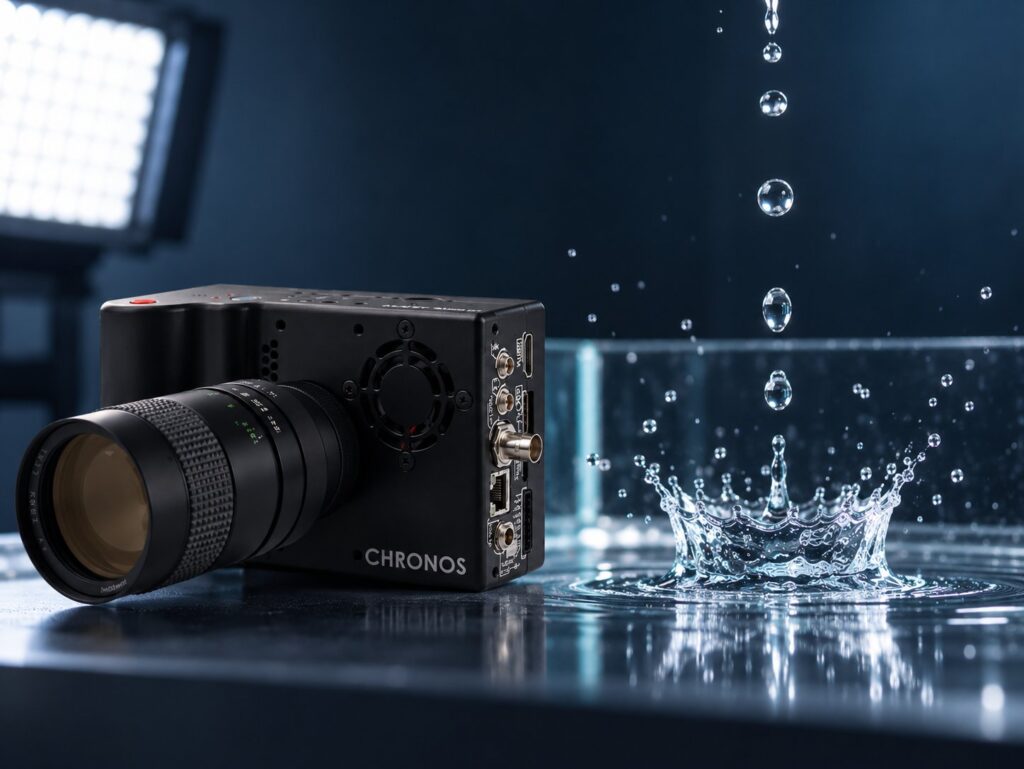
High-Speed Cameras for Fluid Dynamics: Applications & Benefits Fluid dynamics involves some of the fastest and most complex phenomena in engineering and scientific research. Droplets break apart in milliseconds, bubbles can collapse almost instantaneously, and turbulent flow can produce constantly changing vortices and instabilities. These events are often too fast for the human eye and conventional cameras to capture in meaningful detail. High-speed cameras provide a way to make these transient events visible. By recording thousands of frames per second and playing the footage back in slow motion, researchers and engineers can observe how a fluid behaves from one moment to the next. Chronos High Speed Cameras offer a practical imaging solution for a wide range of fluid dynamics applications, from droplet and spray analysis to cavitation, jet breakup and turbulence studies. Why High-Speed Imaging Matters in Fluid Dynamics A conventional video camera may capture an event at 30 or 60 frames per second. While this is sufficient for everyday video, it can be inadequate for studying rapidly changing fluid behavior. Consider a droplet striking a surface. The entire process, from initial impact to spreading, splashing and the formation of…
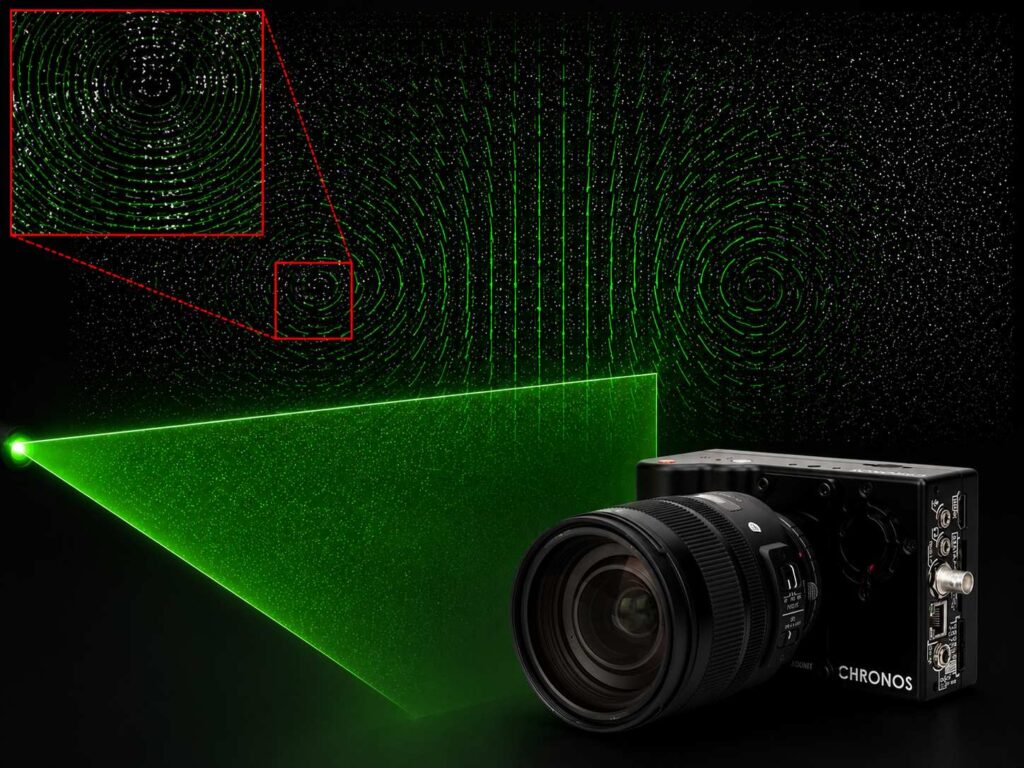
Particle Image Velocimetry (PIV): How Chronos High-Speed Cameras Enable Accurate Flow Analysis Understanding how fluids move is fundamental to improving the performance of aircraft, automobiles, industrial machinery, and even medical devices. Engineers and researchers rely on precise flow measurement techniques to analyze velocity, turbulence, mixing, and aerodynamic performance. Among the many available methods, Particle Image Velocimetry (PIV) has become one of the most trusted optical techniques for capturing detailed flow behavior without disturbing the fluid itself. At the heart of every successful PIV system is a high-speed camera capable of capturing rapidly moving particles with exceptional clarity and precision. In this article, we’ll explore what Particle Image Velocimetry is, why high-speed imaging is essential, and how Chronos High-Speed Cameras provide a practical and cost-effective solution for many PIV applications. What is Particle Image Velocimetry (PIV)? Particle Image Velocimetry (PIV) is a non-contact optical measurement technique used to visualize and quantify the velocity of fluids. Instead of inserting probes or sensors into the flow, PIV uses microscopic tracer particles that faithfully follow the movement of the fluid. The process begins by introducing these particles into the liquid or gas under investigation….
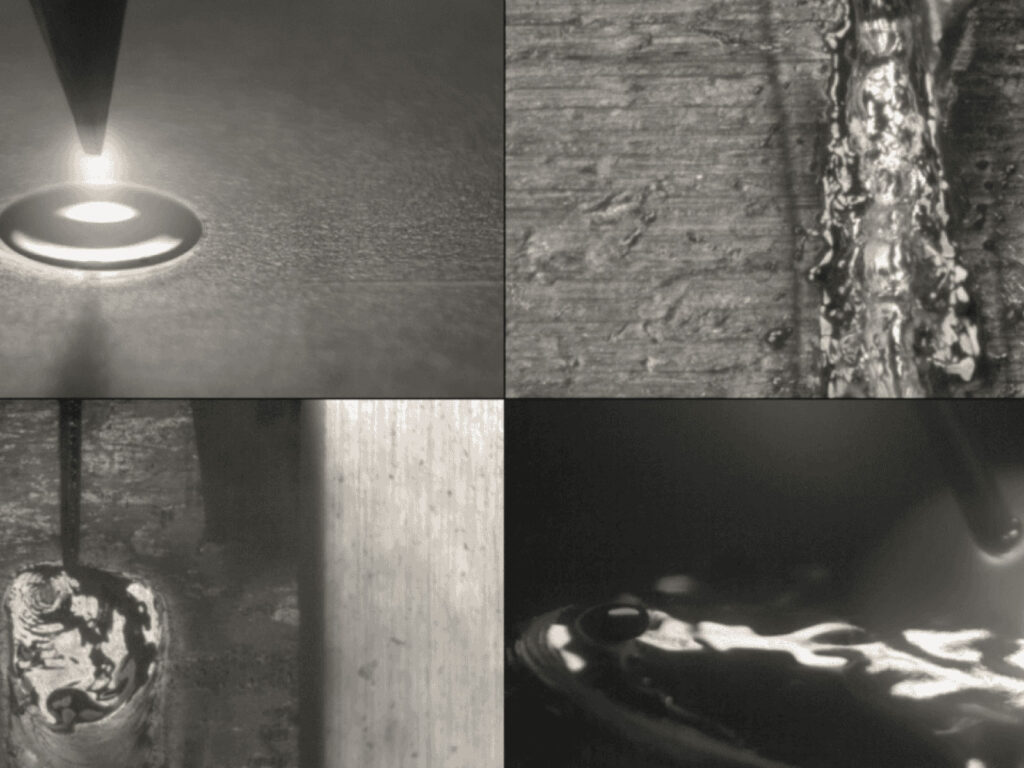
Applications of High-Speed Cameras: From Industrial Testing to Cinematic Storytelling High-speed cameras have become essential tools across science, engineering, manufacturing, and even entertainment. By capturing events that happen in microseconds, they reveal details too fast for the human eye or conventional video equipment. Whether it is understanding how a product breaks during a drop test, analyzing complex fluid patterns, or producing cinematic slow motion for advertisements, high-speed imaging opens a window into hidden worlds. In this blog post, we explore the major applications of high-speed cameras across industries, with examples ranging from crash tests and ballistics to content creation and biomechanics. These use cases highlight how powerful high-speed imaging has become for innovation, problem solving, and storytelling. 1. Product and Material Testing One of the most common uses of high-speed cameras is in product and material testing. Understanding how materials behave under stress, impact, or motion helps engineers improve safety and durability. Drop Testing Companies conduct drop tests on everything from smartphones and appliances to packaging and protective gear. A high-speed camera captures the exact moment of impact and how shock waves travel through the product. Engineers can identify weak…
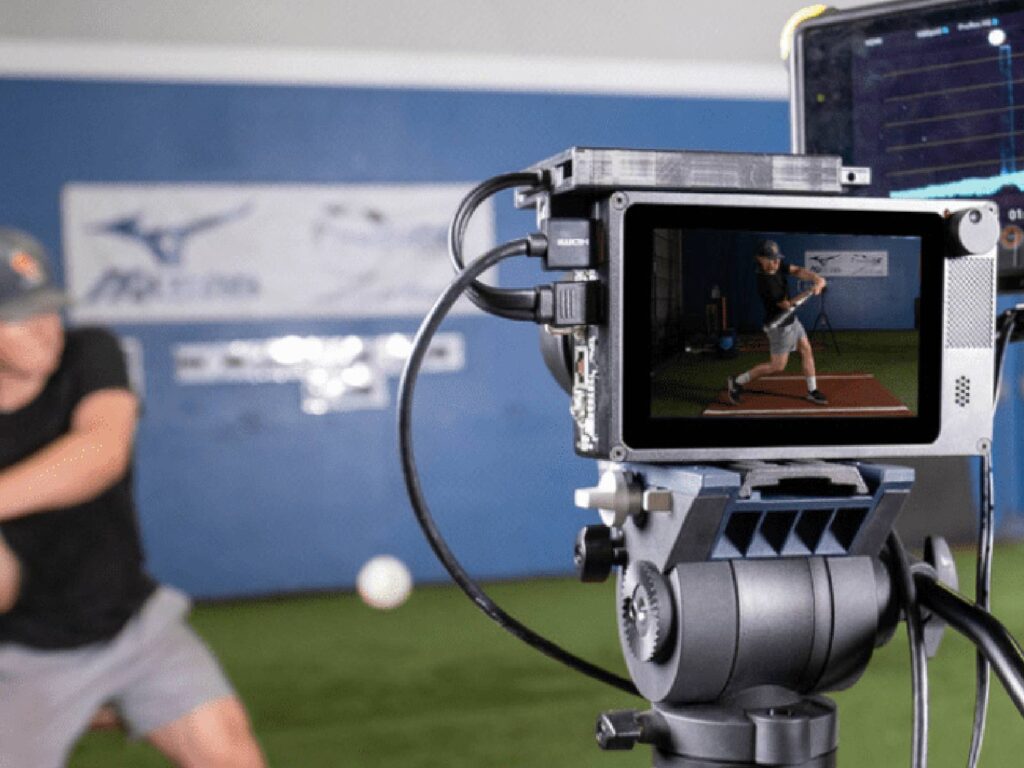
What Are High Speed Cameras: A Comprehensive Guide If you have ever wondered how filmmakers capture a bullet piercing glass, how engineers study car crash impacts, or how scientists analyse the motion of a hummingbird’s wings, the answer lies in high speed cameras. These specialized imaging systems record motion at thousands or even millions of frames per second, revealing details too fast for the human eye or a normal camera to detect. In this guide, we break down what high speed cameras are, how they work, and the key technologies that power them. What Is a High Speed Camera? A high speed camera is designed to capture video at extremely high frame rates far beyond the 24 to 60 fps recorded by most consumer or professional video cameras. Depending on the model, a high speed camera may capture anywhere from 1,000 fps to more than 1,000,000 fps. At these speeds, events that normally occur in an instant such as a droplet hitting a surface, an airbag deploying, or a manufacturing defect can be slowed down and analyzed in great detail. This makes high speed cameras indispensable in research, engineering, production,…
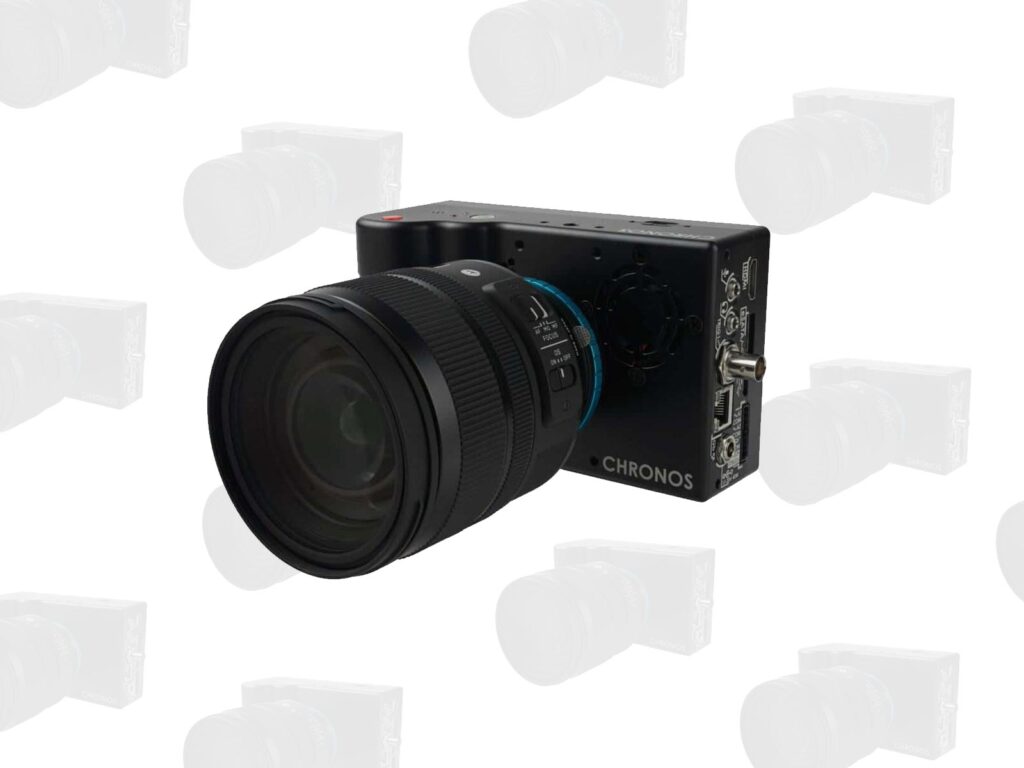
Industrial High-Speed Cameras: Key Technologies, Interfaces, and Applications In the world of industrial automation, quality control, and scientific research, seeing what the naked eye can’t is often the key to precision and progress. That’s where high-speed cameras come in. These powerful imaging tools are designed to capture thousands of frames per second, revealing split-second events in stunning detail. But not all high-speed cameras are created equal, and not every interface can handle the data they generate. This article explores what makes a camera high-speed, the interfaces that power them, and how technologies like GigE Vision fit into the picture. What Makes a Camera ‘High-Speed’? A high-speed camera is typically defined by its ability to capture hundreds or even thousands of frames per second (fps). But frame rate alone doesn’t tell the whole story. Here are the core components that determine a camera’s high-speed capabilities: 1. Frame Rate Entry-level high-speed cameras may start around 250 fps, while advanced models can exceed 1,000,000 fps. 2. Shutter Speed To freeze motion without blur, exposure times often need to be in the microsecond range. High speed cameras have short exposure mode to support the…